
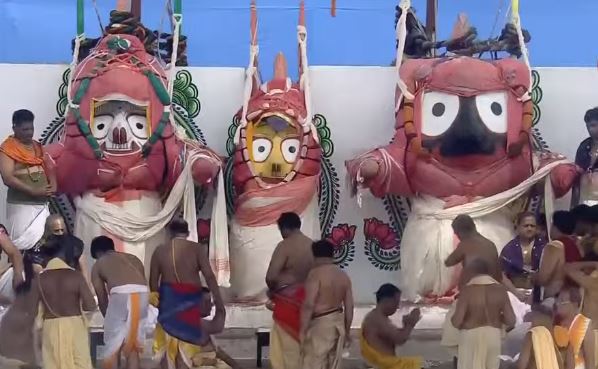
Every year in Puri, Odisha, something extraordinary happens—something that feels less like ritual and more like a divine homecoming.
On the full moon day of Jyeshtha, the massive gates of the sacred Jagannath Temple open in a way they do only once a year for this occasion. The air becomes thick with chants, conch shells, and the restless anticipation of thousands of devotees waiting for one moment: the appearance of Lord Jagannath, along with Lord Balabhadra, Devi Subhadra, and Lord Sudarshan, outside their sanctum.
This is Deva Snana Purnima, also known as Snana Yatra—the festival where divinity is not hidden behind temple walls but brought into the open, almost like the Lord choosing to meet His devotees face-to-face.
A Festival That Feels Alive, Not Just Ritualistic
Unlike many temple festivals that remain within inner chambers, Snana Yatra is openly dramatic, emotional, and deeply human in its expression.
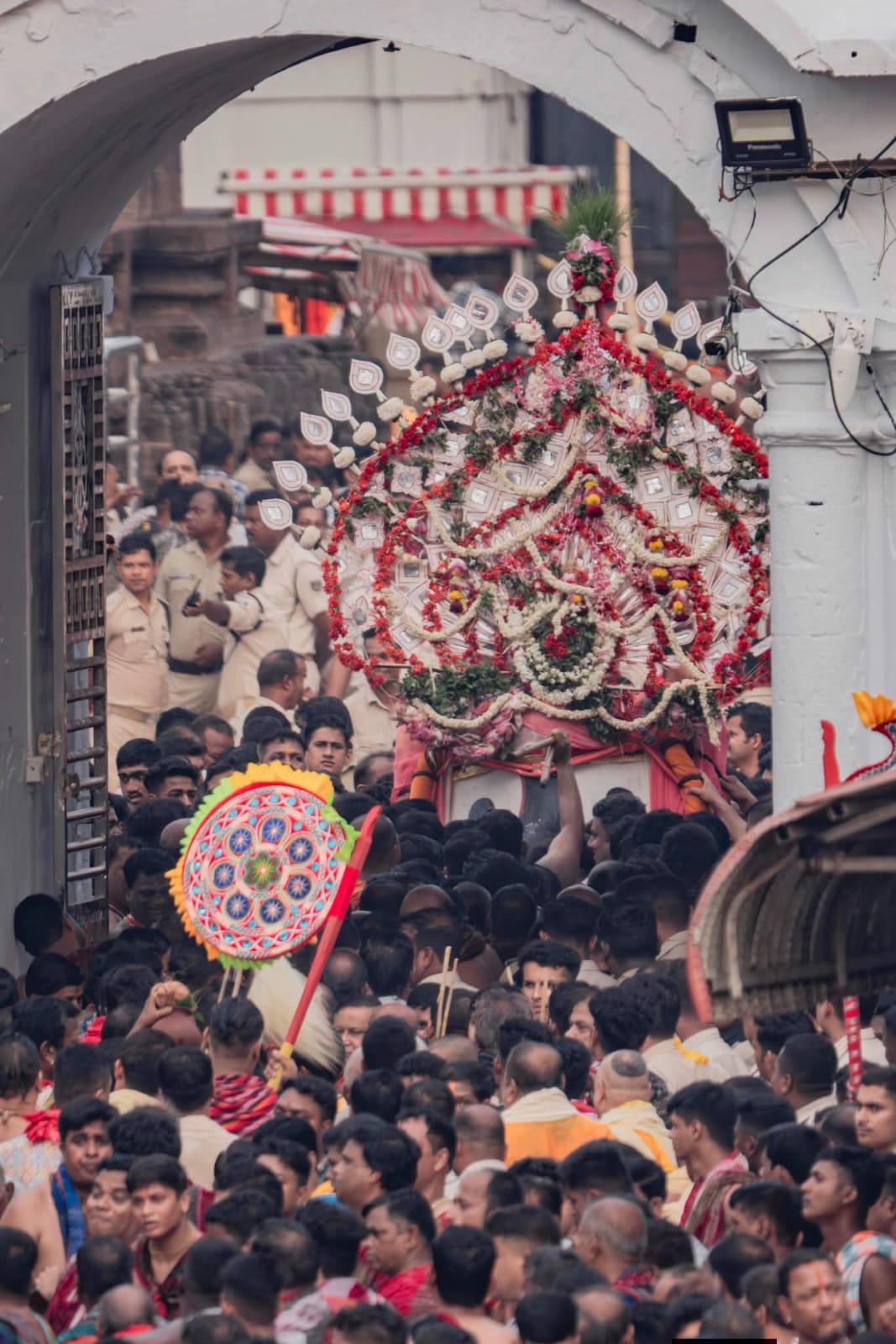
The day begins before sunrise. Temple priests move with urgency and devotion as they prepare for the Pahandi procession—a slow, swaying ceremonial journey where the wooden deities are brought out from the sanctum.
It is not a mechanical act. It feels alive.
Drums echo through the stone corridors. Conch shells cut through the morning air. Devotees cry, sing, fold their hands, and sometimes simply stand silent—overwhelmed by the presence of something they cannot fully explain but deeply feel.
One by one, the deities are carried to the grand Snana Mandap, the elevated bathing platform where the entire ceremony unfolds in public view.
The Sacred Bath: A Ritual of Devotion and Precision
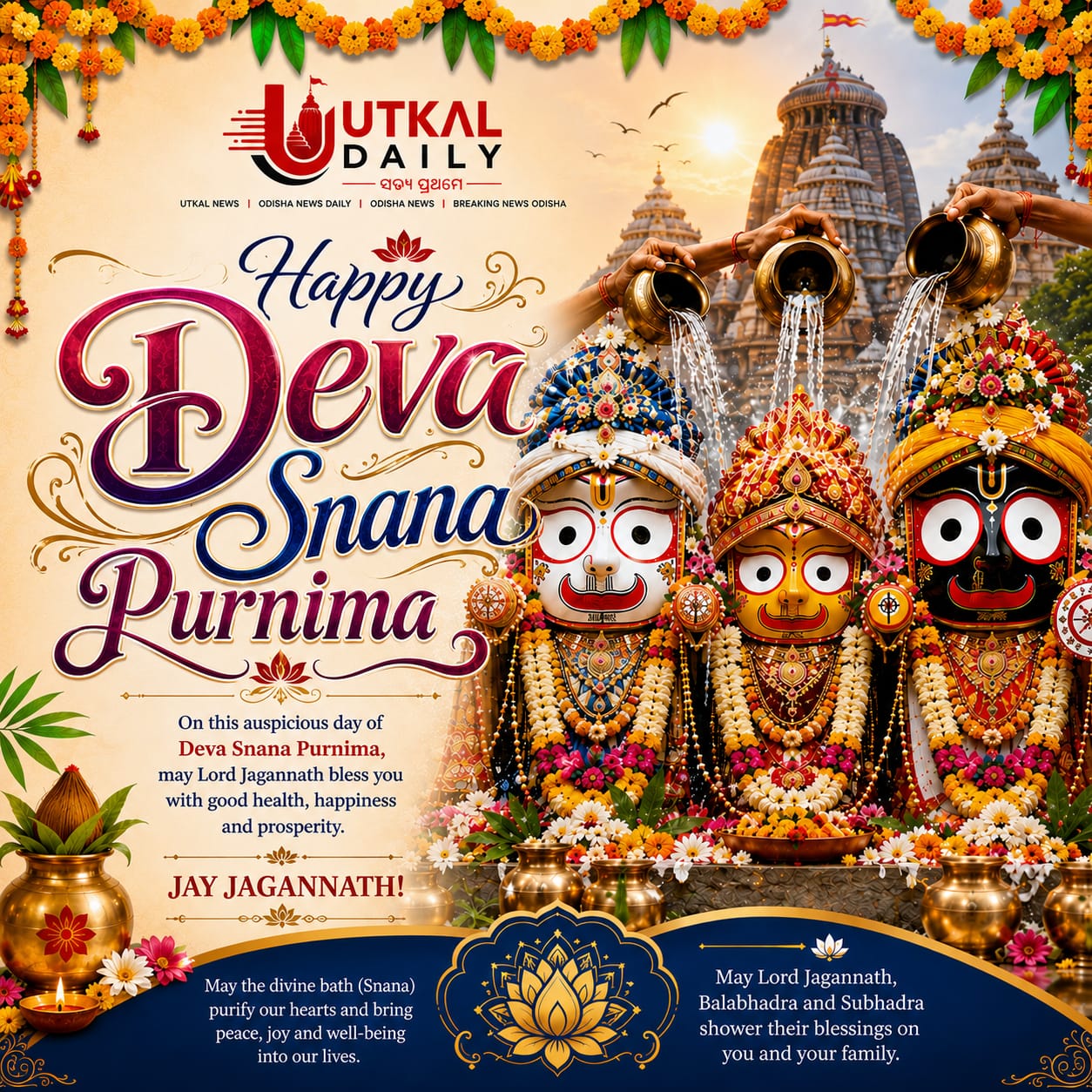
At the heart of Snana Yatra lies the ritual bathing of the deities using 108 pitchers of sacred water drawn from the temple’s exclusive Suna Kua (Golden Well).
This is not ordinary water. It is ritually purified with herbs, sandalwood, flowers, turmeric, and sacred mantras. By the time it is poured, it is believed to carry both physical purity and spiritual potency.
Each deity receives a carefully measured offering:
- Lord Jagannath – 35 pitchers
- Lord Balabhadra – 33 pitchers
- Devi Subhadra – 22 pitchers
- Lord Sudarshan – 18 pitchers
Together, they complete the sacred number 108—a number deeply symbolic in Hindu cosmology, often associated with completeness, spiritual wholeness, and the universe itself.
What makes this moment powerful is not just the ritual precision, but the feeling among devotees that they are witnessing something intimate—almost as if the divine is being cared for like a beloved family member.
When the Lord Becomes “Human”
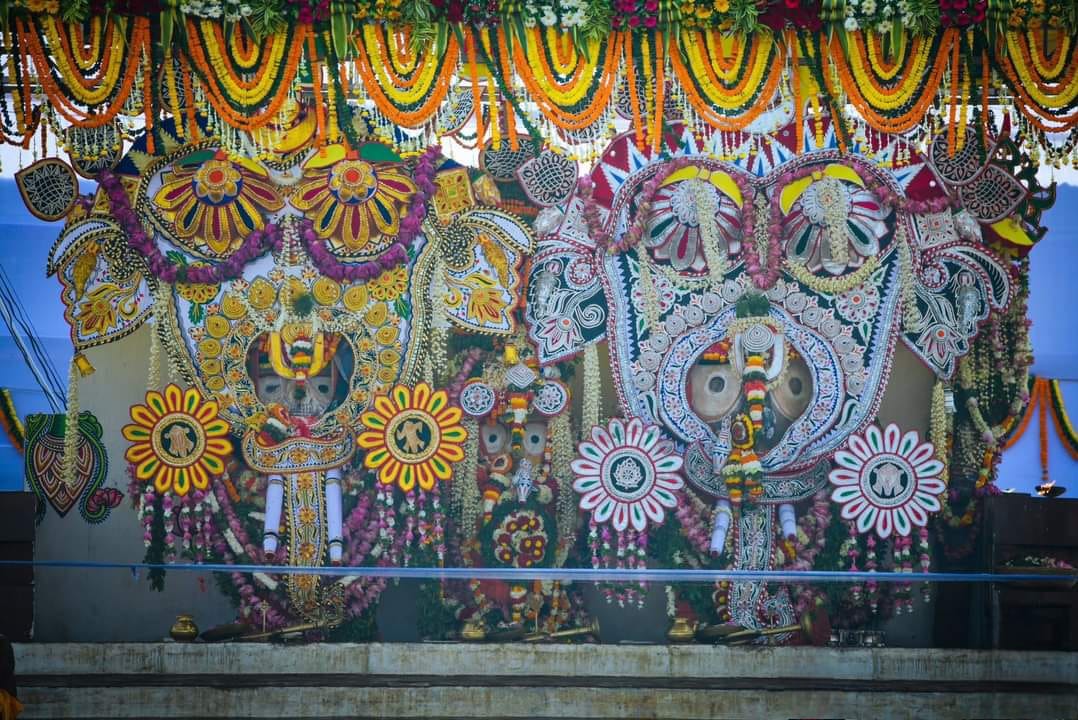
Immediately after the bathing ceremony, the deities are dressed in simple white garments known as Sada Besha.
And then comes one of the most visually striking transformations in the entire Jagannath tradition: the Gajanana Besha, also known as the Hathi (elephant) attire.
In this form, Lord Jagannath is adorned to resemble Lord Ganesha.
To an outsider, it may appear symbolic or decorative. But for devotees, it carries a deeper emotional truth: the divine can take any form to respond to pure devotion.
A popular legend tells of a devotee who longed to see Lord Jagannath in an elephant form. In response, the Lord is believed to have manifested in a Ganesha-like appearance, turning devotion into vision and desire into divine experience.
What remains today is not just tradition—but memory preserved in ritual.
The Quiet After the Celebration: Anasara
After the grand bathing ceremony, something unexpected happens.
The temple becomes unusually quiet.
The deities are believed to fall into a symbolic fever after the heavy ritual bathing. Whether taken literally or metaphorically, the tradition treats it with care and reverence.
The deities are moved to a secluded space called the Anasara Ghara, where they remain away from public view for about 15 days.
This period is called Anasara.
During this time:
- Devotees do not see the main deities
- Special herbal preparations are offered
- Temple priests attend to them like caretakers
- Worship continues, but in a more intimate and hidden form
It is one of the rare traditions where the divine is treated with a sense of vulnerability—almost human, almost relatable.
When Devotion Shifts to Paintings
Even though the main idols are not visible, devotion does not pause.
Instead, worship continues through sacred painted representations known as Anasara Patti—handcrafted images of the deities placed for devotees to offer prayers.
These paintings become a bridge between absence and presence, reminding devotees that faith does not depend only on sight.
The Return: When the Lord Reappears
After days of silence and symbolic healing, comes the moment of return.
The deities undergo Netrotsava, a ritual where their eyes are freshly repainted. This act symbolizes awakening, renewal, and restored divine energy.
Then comes Nava Jaubana Darshan, one of the most awaited moments in the entire Jagannath tradition.
For the first time after Anasara, devotees see the Lord again—refreshed, renewed, and ready for the next grand journey: the Rath Yatra.
The Deeper Meaning Behind Snana Yatra
What makes Deva Snana Purnima unique is not just its scale or mythology, but its emotional texture.
It portrays something unusual for a divine tradition: the gods are not distant, untouched beings. They bathe. They rest. They fall “ill.” They recover. They return.
This human-like cycle makes Lord Jagannath feel accessible—almost like a companion in life rather than a distant celestial ruler.
Scriptures like the Skanda Purana connect this ritual to ancient tradition, but for devotees, its meaning is lived rather than read.
To witness Snana Yatra is often described as feeling less like observing religion and more like stepping into a shared emotional world between humans and the divine.
A Festival That Begins a Journey
Snana Yatra is not an isolated celebration—it is the opening chapter of a much larger spiritual movement that leads to the world-famous Rath Yatra.
The sequence unfolds like a story:
- Snana Yatra – the sacred bathing
- Gajanana Besha – divine transformation
- Anasara – quiet healing
- Netrotsava – awakening of vision
- Nava Jaubana Darshan – return to public gaze
- Rath Yatra – the great journey of the Lord
Each step feels like a chapter in a living epic.
Closing Reflection
In a world that often separates the sacred from the everyday, Deva Snana Purnima does something different—it blends them.
It shows a Lord who does not remain behind closed doors but steps into the open, shares human-like experiences, and returns again to bless His devotees.
That is why, year after year, people return to Puri—not just to witness a ritual, but to feel a connection that is ancient, emotional, and deeply personal.
Because in Snana Yatra, the divine is not only worshipped.
It is experienced.