
A Culinary Legacy That Allows Guests to Move Between Eras in a Single Meal
TOKYO, June 17: Restaurants worldwide are rethinking how meals are experienced, complementing technical excellence with a greater emphasis on memory, heritage and narrative. This approach reflects a broader shift in consumer expectations, where context, origin and emotional connection carry as much weight as flavor, creating a dining experience that almost transports guests back in time.
Industry trends indicate rising demand for immersive, story-driven experiences alongside renewed interest in heritage cuisine and culinary nostalgia. For many operators, this has meant building concepts designed to evoke history. At the Imperial Hotel, Tokyo, that narrative does not need to be constructed; it already exists. What is now emerging as a defining direction in global hospitality has, in effect, long been integral to the hotel’s culinary identity for more than 135 years.
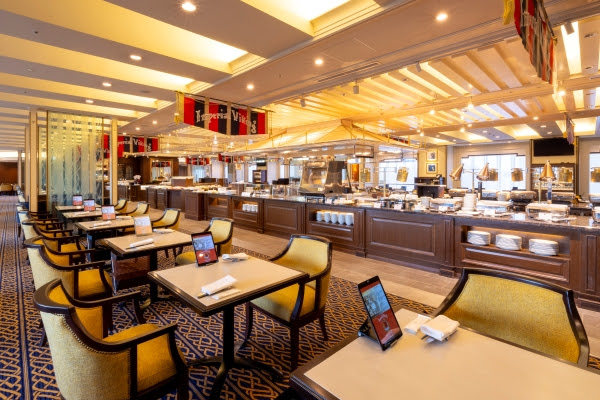
Within the Imperial Viking Sal, the hotel’s long‑established buffet restaurant, dishes originally created for specific guests and moments in history remain in active service. Introduced in 1958 as Japan’s first “Viking” buffet, the concept marked a turning point in how the country engaged with international cuisine, bringing multiple culinary traditions into a single setting while allowing guests to shape their own experience. Inspired by the Scandinavian smorgasbord encountered by Imperial Hotel president Tetsuzō Inumaru, the format was adapted for a Japanese audience as a dining style centered on variety and individual choice.
The restaurant’s cultural impact extends beyond the hotel itself. The name “Viking,” originally chosen for its Nordic associations, entered everyday language and became widely used in Japan as a synonym for all‑you‑can‑eat buffet dining, reflecting how the concept was not only adopted but fully integrated into the country’s modern food culture.
Following its renewal in August 2023, the Imperial Viking Sal now presents more than 50 dishes spanning French, Japanese, and Chinese influences, reflecting its continued evolution from its original smorgasbord roots. Unlike a traditional set menu, the format allows diners to move fluidly across cuisines and eras within a single meal. A single visit can trace a progression from prewar European techniques to postwar Japanese adaptations and into contemporary interpretations, creating a layered experience built plate by plate.
“Many restaurants today are working to build experiences around history and narrative,” said Kazuhiko Yashima, General Manager of the Imperial Hotel, Tokyo. “At the Imperial Hotel, those stories are already embedded in our dishes. They were created at distinct moments in time for real guests, and they have remained part of our offering ever since.”
Several signature offerings, both dishes and beverages, anchor this continuity, reflecting the hotel’s role in cultural exchange, personalization, and culinary evolution.
The Chaliapin Steak, created in 1934 for Russian opera singer Feodor Chaliapin, represents an early example of highly personalized cuisine. Developed to address the singer’s difficulty with tougher cuts of meat, the steak is tenderized using grated onions, whose enzymes break down the fibers to produce a soft, yielding texture. It is finished with sautéed onions that add depth without the need for a traditional sauce, illustrating how technical adaptation can lead to lasting culinary innovation.
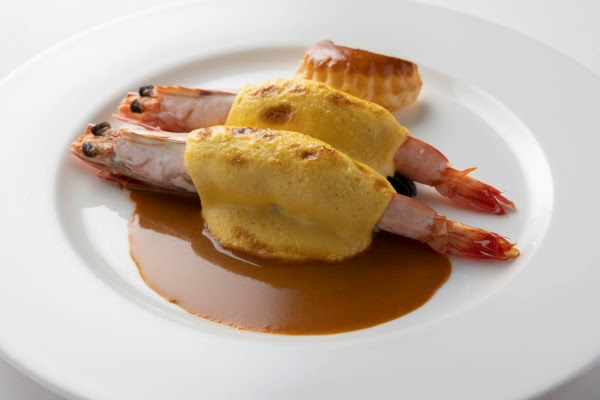
The Gratin of Prawn and Sole “Queen Elizabeth II”, first prepared during the Queen’s state visit to Japan in 1975, reflects the precision and restraint associated with diplomatic hospitality. The dish combines delicate seafood with a carefully balanced cream-based preparation designed to feel refined rather than overtly rich. Its name, granted with the Queen’s approval, ties it directly to a specific historical moment and reinforces its place within the hotel’s legacy of state occasions.
The hotel’s Signature Double Consommé Soup, refined over generations, reflects the introduction and evolution of classical French culinary technique within Japan. Achieving its clarity requires a prolonged clarification process that removes impurities while concentrating flavor, resulting in a crystal-clear broth with notable depth. Long regarded as a benchmark of technical discipline, it underscores the precision that underpins the hotel’s culinary foundations.
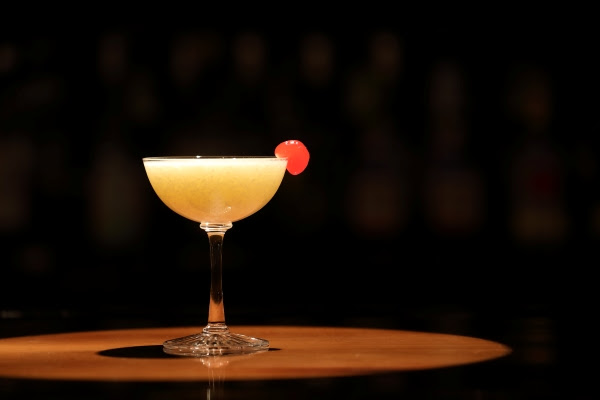
The Imperial Hotel’s signature “Mount Fuji” cocktail, first created in 1924, represents a distinctive moment in the hotel’s history of hospitality and innovation. Conceived as a welcome drink for Western passengers arriving in Tokyo on around‑the‑world cruises, it was designed as a visual tribute to Japan’s most iconic landscape. Its white, foamy surface, accented with a maraschino cherry, evokes the image of a snow‑capped Mount Fuji with the red sun rising above its peak. As the Imperial Hotel’s first original cocktail, its carefully balanced recipe, combining gin, fruit juices, egg white, and cream, has been passed down unchanged since its creation. While later accounts note that the identity of its creator remains uncertain, the Mount Fuji continues to be served at the Old Imperial Bar as an enduring symbol of the hotel’s legacy and its tradition of welcoming international guests.
Taken together, these dishes trace a progression of influence, adaptation and exchange. They serve not only as menu offerings, but as records of shifting cultural relationships and evolving tastes, shaped by the individuals and moments for which they were originally created. As the industry increasingly favors experience-led formats and narrative-driven menus, dining rooted in real historical moments and figures has gained renewed relevance. The Imperial Hotel, Tokyo offers a distinct point of reference, one grounded not in recreation, but in continuity.
The result is not a reinterpretation of history, but its continuation. At the Imperial Hotel, Tokyo, guests encounter another era not through imagination, but through a progression of dishes that carries them across time.