
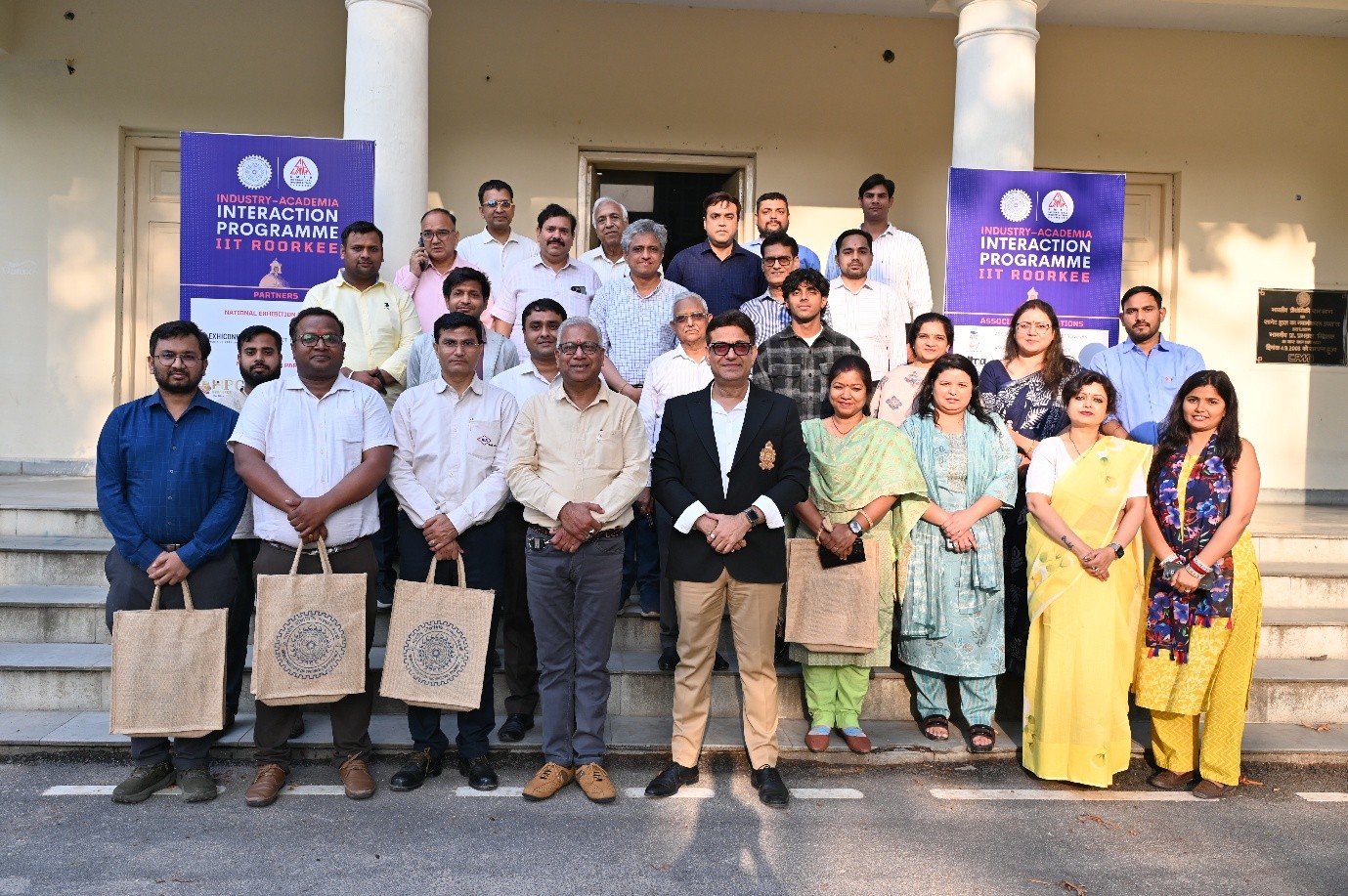
Uttarakhand, Roorkee, May 21: Indian Institute of Technology Roorkee, in collaboration with leading industry associations, organized the Industry Academia Meet 2026 with the objective of strengthening partnerships among academia, industry, government agencies, and innovation stakeholders. The event emerged as a significant platform for dialogue on innovation, research translation, technology transfer, entrepreneurship, and sustainable industrial development.
The meet witnessed active participation from industry leaders, researchers, startups, policymakers, and faculty members, who deliberated on bridging the gap between academic research and industrial requirements. A major focus of the discussions was on strengthening the “lab-to-market” ecosystem to accelerate the conversion of research outcomes and emerging technologies into commercially viable products and scalable industrial solutions.
Addressing the gathering, Prof. K. K. Pant emphasized the critical role of industry–academia collaboration in fostering innovation-driven growth and developing technologies capable of addressing societal and industrial challenges. He highlighted that such collaborations are also aligned with the vision of the National Education Policy, which encourages multidisciplinary learning, innovation, experiential education, and stronger integration between academia and industry for meaningful societal impact.
Speaking on the occasion, Joint Magistrate, Roorkee, Shri Deepak Ramachandran Seth appreciated the initiative and underscored the importance of collaborative innovation in addressing regional and national challenges through indigenous technologies, sustainable practices, and research-driven solutions. He further extended his support for strengthening collaborative engagements between industries and academic institutions to promote sustainable growth and technological advancement.
The Dean, Sponsored Research and Industrial Consultancy, Prof. Vivek Kumar Malik, highlighted IIT Roorkee’s growing engagement with industries through sponsored research, consultancy, intellectual property generation, startup incubation, and technology transfer initiatives. He emphasized that sustained engagement with industry stakeholders is essential for creating a vibrant innovation ecosystem and enhancing the impact of academic research.
Prof. Naveen Kumar Navani, Dean of Academic Affairs, emphasized the importance of greater student participation in industry-oriented learning, research, and innovation activities. He highlighted that stronger industry–academia collaboration would create enhanced opportunities for internships, experiential learning, collaborative projects, and multidisciplinary problem-solving, enabling students to gain practical exposure and better understand real-world industrial and societal challenges.
During the deliberations, participants discussed several pressing real-world challenges requiring immediate technological interventions, including pollution control, water resource management, waste management, landslide mitigation, sustainability, and issues related to electronic gadgets and e-waste management. The pharmaceutical sector also emerged as a major focus area, with discussions centered on process optimization, sustainable manufacturing, waste handling, regulatory-driven innovation, and advanced drug packaging solutions.
Representatives from industry associations stressed the importance of continuous engagement with premier academic institutions to strengthen collaborative R&D, skill development, internships, and technology commercialization initiatives. It was also collectively decided that domain-specific meetings and focused interaction sessions would be organized regularly to better understand sectoral requirements and facilitate targeted collaborations between researchers and industries.
The meeting concluded with a shared commitment to building a stronger innovation ecosystem through sustained industry–academia partnerships aimed at technological advancement, industrial competitiveness, and societal impact.