United Nations, Oct 24: India is strengthening international cooperation in nuclear science and technology to help developing nations access its benefits, with the country’s role as a “Vishwa Bandhu” or friend to the world reflecting its commitment to South-South cooperation, BJP MP Sangeeta Kumari Singh Deo has said.
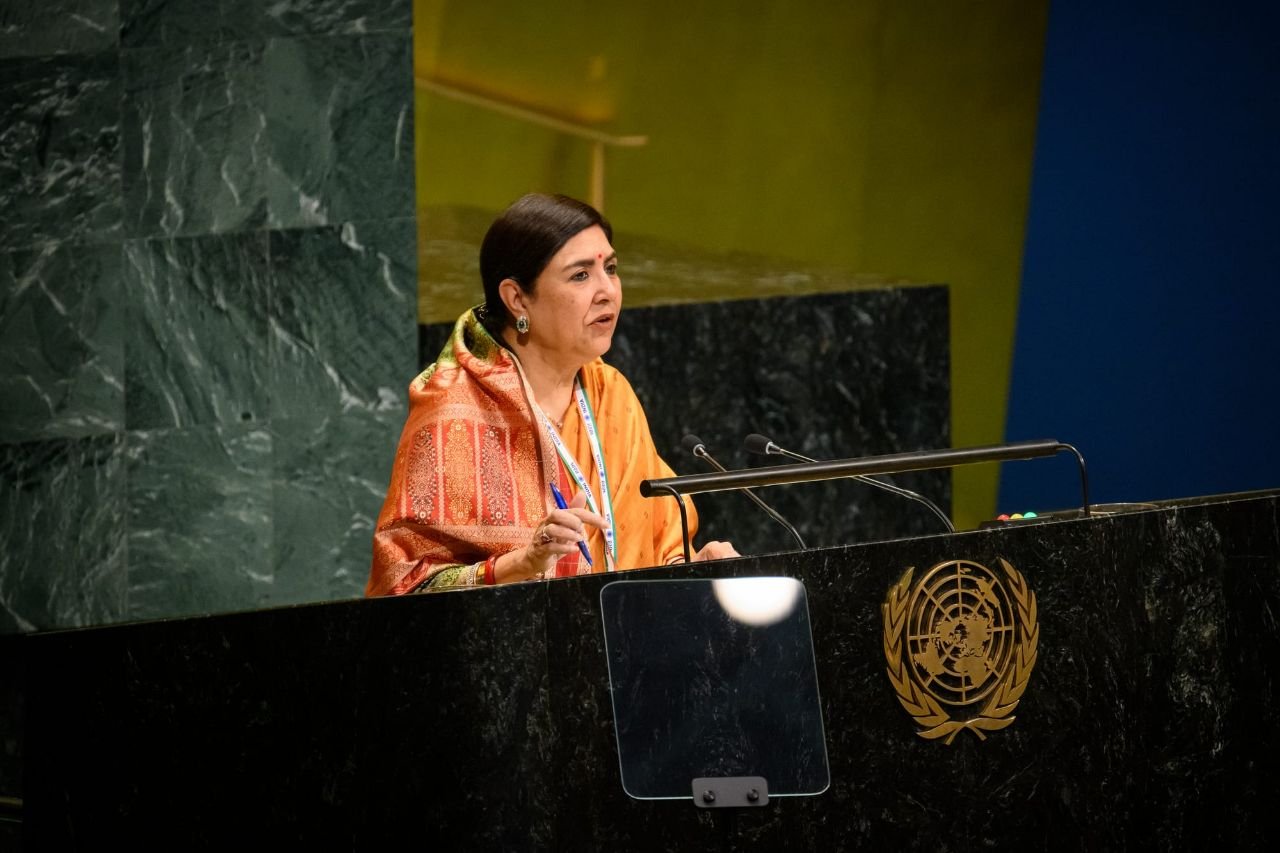
Addressed the 81st session of the UN General Assembly on the Report of the International Atomic Energy Agency (IAEA), reaffirming 🇮🇳’s commitment to the peaceful use of nuclear science, sustainable development, South-South cooperation, and strong nuclear safety and security frameworks. #SangeetaKumariSinghDeo #IndiaAtUN #UNGA81 #IndiaUNPartnership #UnitedNations
— Sangeeta Kumari Singh Deo (@sksingh_deo) October 24, 2026
Leading an Indian parliamentary delegation to the United Nations, Singh Deo highlighted India’s development partnerships and its efforts to share scientific expertise with countries across the Global South while addressing the India-UN Fund Annual Event 2026 at the UN General Assembly.
She said India’s global development cooperation remained a key pillar of its foreign policy, with an emphasis on mutual respect, shared benefits and support for the priorities identified by partner countries.
India’s RCA Chairmanship to Strengthen Scientific Partnerships
Singh Deo highlighted India’s association with the International Atomic Energy Agency (IAEA), particularly through the Regional Cooperative Agreement for Research, Development and Training Related to Nuclear Science and Technology (RCA).
India assumed the chairmanship of the 22-member RCA in May 2026, reaffirming its commitment to expanding scientific collaboration and strengthening partnerships among member countries.
“India’s chairmanship of RCA is a reaffirmation of our strong commitment to South-South cooperation and to ensuring that the benefits of nuclear science reach every nation that seeks them,” she said.
Addressing representatives from regions including the Pacific, Southeast Asia, Europe, Africa and Latin America, Singh Deo emphasised that India’s approach to development cooperation was demand-driven and consultative.
She said partner countries were encouraged to determine their own priorities, with cooperation guided by mutual respect, mutual benefit and respect for national sovereignty.
India-UN Fund Supports Development Across the Global South
Singh Deo also underscored the role of the India-UN Development Partnership Fund, established in 2017 with an initial Indian commitment of $150 million.
The fund supports development initiatives across the Global South through concessional financing, infrastructure assistance, humanitarian support and capacity-building programmes.
India’s engagement through such initiatives, she said, reflects its broader effort to make development partnerships more inclusive and responsive to the needs of participating countries.
The approach seeks to combine India’s technical capabilities and development experience with the priorities of partner nations.
Cancer Care Training Highlights Neighbourhood-First Policy
As an example of India’s regional cooperation, Singh Deo referred to a specialised cancer-care training programme conducted by Mumbai’s Tata Memorial Centre (TMC) under the BIMSTEC cooperation framework.
The programme provided training opportunities for healthcare professionals from Bangladesh, Bhutan, Nepal and Myanmar, she said.
Tata Memorial Centre operates under the Department of Atomic Energy, and the initiative demonstrates how India’s scientific and institutional expertise can support capacity-building in neighbouring countries.
The programme also highlights the potential for cooperation in healthcare, where knowledge-sharing and professional training can help strengthen medical capabilities across the region.
Indigenous Nuclear Technology Marks Major Milestones
Singh Deo pointed to India’s domestic nuclear technology capabilities as another area of significant progress.
She referred to the achievement in April 2026 of criticality at the indigenous 500-megawatt Prototype Fast Breeder Reactor at Kalpakkam, Tamil Nadu. Criticality marks the point at which a nuclear reactor sustains a controlled chain reaction.
She also highlighted a reported milestone in June, when the reactor demonstrated heat-based hydrogen production, describing it as a first-of-its-kind achievement globally.
These developments, she said, reflect India’s advances in nuclear research and its efforts to expand the applications of nuclear technology.
Nuclear Power Generation and Safety Record Highlighted
Singh Deo also cited the performance of Nuclear Power Corporation of India Limited (NPCIL), which generated 55,190 million units of electricity during the previous year, according to the figures she presented.
The company recorded an overall plant load factor of 80 per cent, she said, while highlighting India’s stated emphasis on operational safety.
Nuclear power and research applications, she added, form an important part of India’s technological progress and its wider engagement with international partners.
Expanding Access to Nuclear Science
India’s message at the UN centred on the idea that scientific progress should contribute to wider development rather than remain concentrated among a limited number of countries.
Through its RCA chairmanship, development partnership programmes and regional training initiatives, India is seeking to expand opportunities for countries to benefit from nuclear science and technology.
Singh Deo’s remarks underscored the country’s ambition to combine its growing technological capabilities with international cooperation, positioning scientific collaboration as an important element of its engagement with the Global South.